Kermit: [00:00:00] Wait a minute, I'm skeptical that that AI agent can be as good as a human is. What are you losing in terms of human connection? It allowed us to reduce the cost of re- proactively reaching out and connecting with learners by more than 70%. We were almost 100% reactive in terms of learner support. We don't need to spend months building out roadmaps and testing design when you can build and create so efficiently.
Kermit: You just build it, put it out there, experiment. If it didn't work, throw it away. We talk a lot as an organization about creating ugly pots. Have you heard of the parable?
Ruben: No, tell us. Happy Friday. My name's Ruben Harris. I'm here with my co-founder and co-host, Timur Meyster, and this is The New Normal. The New Normal is a show where we go inside of organizations that have actually deployed AI in production at scale in a way that's made a meaningful impact in their organizations.
Ruben: This is not a show about hype. It's a show where we interview leaders who have made decisions to reimagine their organizations with AI at its core. We're in New York City. We're on the top floor, and I'm excited to introduce our guest. Timur, can you please introduce the guest?
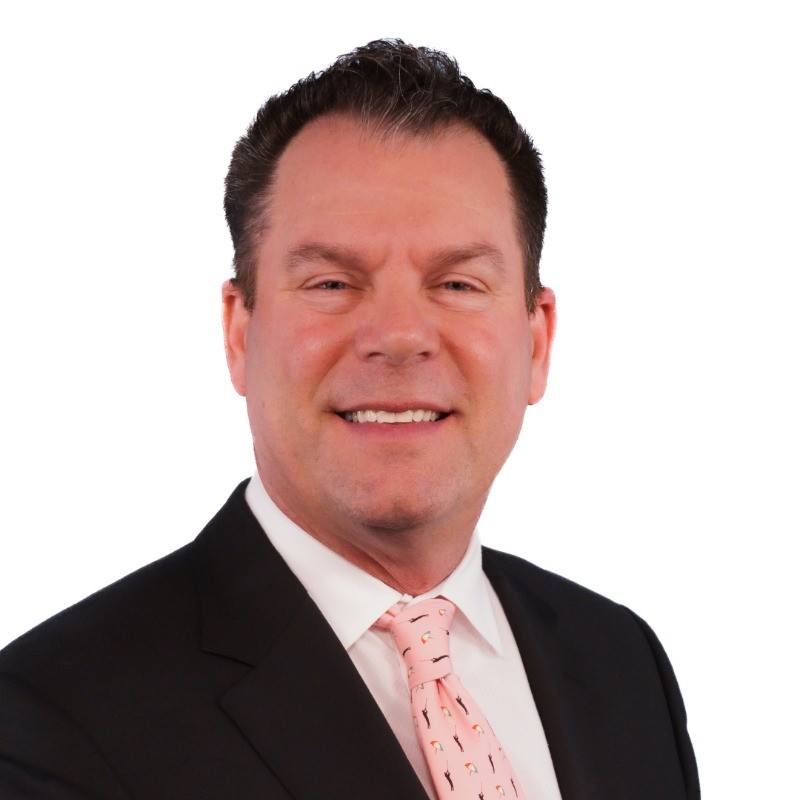
Timur: Thank you, Ruben. So today, our guest is the CEO of Penn Foster, Kermit Cook. Before I introduce our guest, I just wanna set the stage for the episode. Let's go back to the closing decade of the 19th century, where in just a few years a bunch of inventions got created, like the telephone, the automobile, the motion picture, and the electric light bulb, all in the span of 10, 20 years.
Timur: It was a moment when sound, light, and distance itself stopped behaving like it did 1,000 years prior, and the world quietly switched on. The reason it's relevant is because the audience has heard of the light bulb, but they probably haven't heard of a man named Thomas Foster, who in 1890 started a distance learning company providing accounting and engineering courses to coal miners in Scranton, Pennsylvania.
Timur: The idea was simple. If you couldn't get to school, the school would come to you. And that company is called Penn Foster. Jumping 135 years into the present, in 2024, Kermit Cook became the CEO of Penn Foster. Kermit has engineering degrees from Dartmouth, a stint at Teach for America teaching high school physics in St. Louis, a joint MBA and a master's in education from Stanford. Kermit then spent 13 years at KKR, where he ended up co-running KKR's Capstone in the Americas, and then he became the chief operating officer at Cengage Group.
Kermit: Really appreciate it, Timur. Ruben, I appreciate the invitation and the opportunity to have the conversation.
Kermit: I love, Timur, that you started with Thomas Foster and that vision around bringing school to the students. Because at its roots, if you think back to who those coal miners were in 1890 in Scranton, Pennsylvania, they were immigrants primarily. They were people who did not have access to the traditional education system in whatever way that it existed in 1890. But at its core, those are the learners who we still serve today.
Kermit: Our focus is really being a great pathway from a high school level of education to a skilled job, and in particular, doing that in a way that is radically affordable and flexible. Because the learners who we serve are predominantly learners that have, for whatever reason, not been able to be successful in the education system.
Kermit: So we graduated 93,000 learners last year. Roughly half of those, a little more than half, about 50,000, with an accredited high school diploma, and then the other half in our career college programs, where we are specifically focused on paths to jobs in healthcare, in the vet industry, and in trades.
Kermit: We are the largest trainer of veterinary technicians in the country by several orders of magnitude, and we're certainly in the top few when you look at allied healthcare roles like being a medical assistant or a pharmacy technician or a sterile processing technician.
Kermit: Our high school tuition starting, if you come in with zero credits, you can complete high school at Penn Foster for about $1,500. To make a comparison, the average school district across the country spends about $16,000 a year on a student. So we're about a 40th of the cost of what the traditional education system costs to be able to serve a student.
Kermit: In 2023, our conversations with learners, literally 100% of them were because of a reactive response to either a learner reaching out because they want to enroll and talking with one of our reps, or because they ran into a problem with an essay or something is stuck in their learning experience, and they're calling into us.
Kermit: So the vision, one of the primary visions for us with leveraging AI, with leveraging ML models to be able to get much more precise on using our learner data, understand when they're stuck, and they can use support, is to start to be very proactive.
Kermit: We're an organization of round number 700 people. Roughly 450 of those 700 are on the phones every single day talking with learners. And so you start to talk about, oh, we're gonna bring AI agents to be able to have these conversations, and the immediate gut reaction is, "Well, they're gonna replace my job."
Kermit: Our goal is actually not to reduce the number of people. Our goal is the outcome. We need more learners to be successful. Right now, in a given month, roughly 3% of our learners we're in touch with, the 3% of learners who actively reach out to us. We have so much room to do with the 97% to proactively reach out to them.
Kermit: We talk a lot as an organization about creating ugly pots. There's a story about a ceramics teacher who splits their classroom in half and tells half the class that they're gonna be graded just by making one perfect pot. And the other half the class, the teacher tells them, "I'm not gonna look at all at the quality of what you make. Just make as much pottery as you can." And by the end of the semester, the class that was just experimenting freely was making definitively more beautiful pottery, because you don't learn by trying to make one perfect thing. You learn by making hundreds of ugly pots.
Kermit: We started with taking a pool of leads, not existing learners, because we wanted to make sure we learned what to do before we started experimenting with learners who we had committed to a contract with. And it allowed us to reduce the cost of proactively reaching out and connecting with learners by more than 70%. And we saw a 30X ROI on the investment.
Kermit: Over 80% of the learners who enrolled through that campaign starting a year ago are still enrolled and still progressing towards graduation.
Kermit: One of the things that became painfully ingrained for me is how the annual academic calendar constrains innovation. Anybody in a modern software tech company would know you're trying to do new releases continuously. Multiple times a day running tests. Well, in the traditional education world, we had one shot a year to launch a new product.
Kermit: Our commercial model is set up so that you start for as low as $20 down, and then $60 a month while you're learning. Our economic incentives are based on effectively a subscription model. If we're not helping you learn and progress, you're gonna stop learning and you're gonna stop paying. We have 5,000 new learners enrolling every single week, so we can A/B test in a way that very few in the traditional education industry can.
Kermit: We worked with Learnosity, one of our partners on assessment, to build out an AI-driven writing coach. We have more than 20,000 learners a year who get stuck and just stop when they've got a writing assignment. We put all this work into an AI coach to scaffold and support them along the way, and we rolled it out, and the first version had almost no impact because we just launched it out there and we hadn't yet iterated the learner experience and support.
Kermit: So we literally recorded a very rough, nine-minute video that we embedded. And when we rolled out the nine-minute video with the writing coach, then the completion rates on that course went up by 15%.
Kermit: Having an AI tutor sitting there, I compare that to a lecture hall in a traditional higher ed classroom with a couple hundred students. That student who's sitting at the front and raising their hand and then coming and seeing the TA afterwards, they'll use the AI tutor and they'll benefit from it. They were gonna be fine anyway. The student who's falling asleep in the back of the lecture hall, they're never going to proactively tap onto that tutor.
Kermit: Keep a learning mindset for yourself personally, for your teams. We're in a world where change is just the given, and that can create an incredible amount of fatigue and stress across your teams. But the more that we can face that as organizations, as individuals, as learners, and recognize that things aren't gonna be perfect, it's gonna keep evolving, but if I can just embrace the learning that comes along the journey, then you and your teams will be all right.
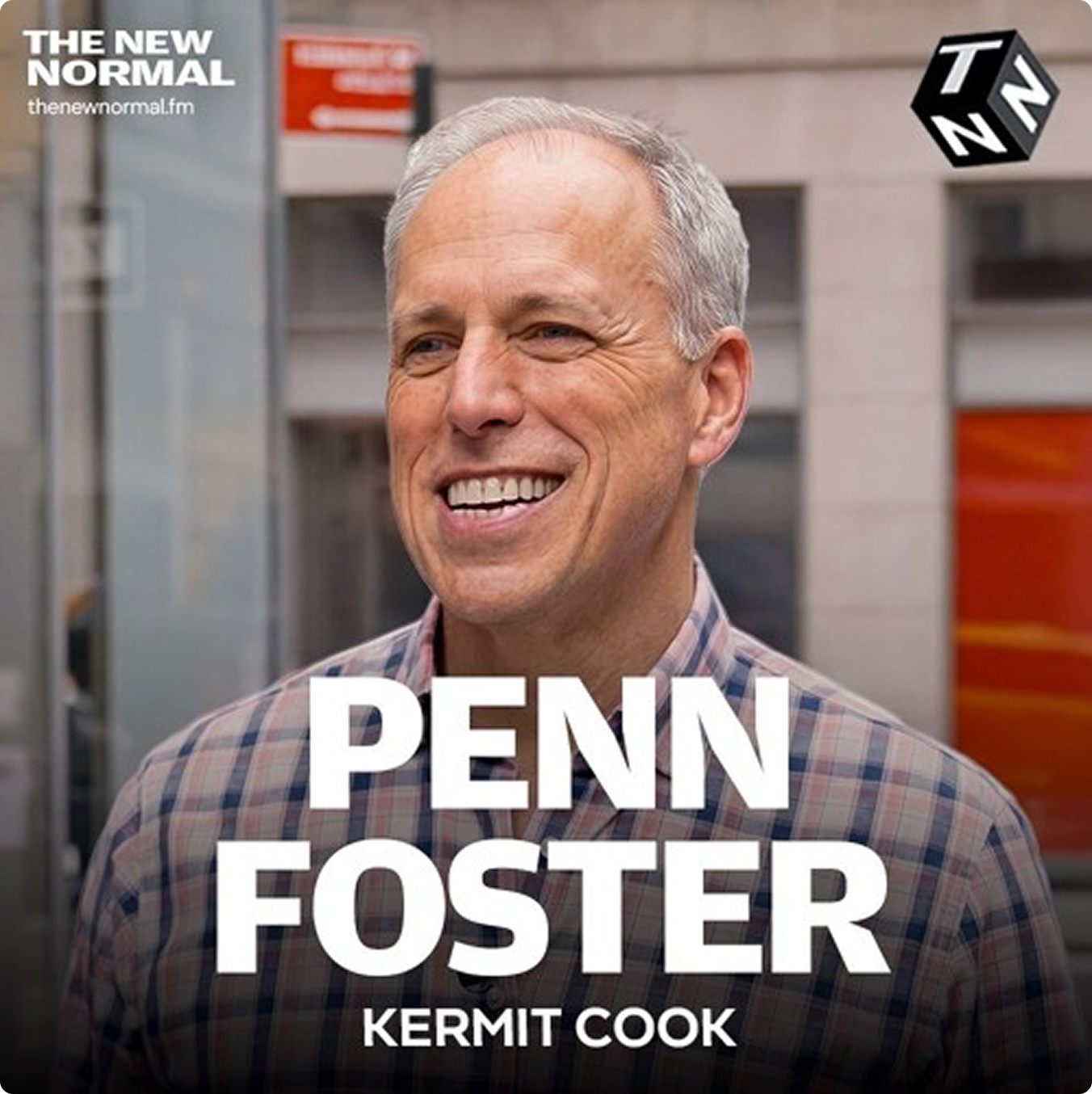









Kermit Cook is the CEO of Penn Foster, a 135-year-old institution that has been teaching distance learners since 1890. Under his leadership, Penn Foster graduates more than 93,000 learners a year and has embraced AI to reinvent a legacy company for the modern era.
Penn Foster has been teaching distance learners since 1890, when founder Thomas Foster began mailing accounting and engineering courses to coal miners in Scranton, Pennsylvania. Today, CEO Kermit Cook leads a 135-year-old institution that graduates more than 93,000 learners a year. If Penn Foster were a school district, it would be the third largest in the country.
On this episode of The New Normal, hosts Ruben Harris and Timur Meyster sit down with Cook to talk about reinventing a legacy company for the AI era and what a year-plus partnership with OutRival has produced: proactive learner outreach, AI writing coaches, and internal tools the company uses to build its own courses.









.png)