[00:00:00] Madeline: One of the things that we have approached at Miami Dade College is defining digital workers versus AI agents. [00:00:10] You've gotta build out this workforce. Mm-hmm. And the workforce is gonna be your human workforce, and then you're gonna have your digital workforce, and then you're gonna have your [00:00:20] technology workforce.
[00:00:20] Madeline: There probably is a solution to be able to have humans do much more high-impact work in the classroom [00:00:30] and in our learning resource centers and in our innovation centers, and let technology solve for some of those things that can be done, um, with a student [00:00:40] at their own time. Students are, we know, they access our platforms 24/7.
[00:00:45] Madeline: Mm-hmm. How do we make sure they get the same support, um, 24/7? It doesn't mean [00:00:50] setting up 24/7 humans. Students engaged a bit longer on conversations with our, the digital [00:01:00] workforce than they did with humans.
[00:01:02] Ruben: Happy Wednesday. My name's Ruben Harris. I'm here with my co-founder and co-host, Timur Meyster, and this is The New Normal.
[00:01:08] Ruben: The New Normal is a show [00:01:10] where we go inside of organizations that are actually using AI in production at scale in a way that's making a meaningful impact in their organizations. This is not a show about [00:01:20] hype. It's a show where we interview leaders who have made the decision to reimagine their organizations with AI at its core.
[00:01:27] Ruben: We're in the heart of Miami. We're on the Wolfson [00:01:30] Campus in its AI center, and I'm excited to introduce our guest. Timur, can you please introduce the guest?
[00:01:36] Timur: Yeah. So today, uh, Ruben and I, um, we're a few [00:01:40] blocks away from, uh, Outrival's home base, and I'm, uh, super honored to welcome, uh, President Madeline Pumariega, um, to [00:01:50] the show.
[00:01:50] Timur: Uh, Madeline, uh, m- uh, President Pumariega has a very impressive background, um, starting at Miami Dade College as a student athlete, [00:02:00] um, serving as the chancellor of the Florida College System, and then returning, uh, to Miami Dade to lead, uh, providing opportunities [00:02:10] and workforce development here. We're gonna unpack all of that, everything that President Pumariega and her team are doing here.
[00:02:16] Ruben: But first, I wanna say, President Pumariega, welcome to [00:02:20] New Normal. Well, welcome to Miami Dade College- ... and I'm happy to be here with both of you. Yeah. For the people that don't know about Miami Dade, can you tell us a little bit about the scale, the history, who you serve? [00:02:30] So Miami Dade College is, uh, the largest community college in the country.
[00:02:34] Madeline: Um, it serves about 125,000 students a year. Wow. We have 2.5 [00:02:40] million alumni. Um, most of our students are coming to campus. Mm. We have eight campuses throughout Miami-Dade County, and we're the workforce engine, [00:02:50] um, for our community, and, and we believe that, you know, talent is universal and opportunity is not.
[00:02:56] Madeline: And at Miami Dade College, we create opportunities for [00:03:00] students in our community every single day. So we're, we're here in your AI center. Um, I don't think a lot of schools have an AI center. Why did you choose to build an AI center [00:03:10] here at Miami-Dade? So when I got here as president in 2021, um, we really laid out how we would advance our strategic priorities at the [00:03:20] college.
[00:03:20] Madeline: One of them was artificial intelligence. In the fall of 2021, we had 500 of our faculty go through AI training. Uh, 2022, we were [00:03:30] building out this center. Um, by the end, early '23, we were developing a college credit certificate, an associate's in science, and a bachelor's [00:03:40] of applied science in artificial intelligence, the first in Florida, and created a multidisciplinary approach, meaning that students just didn't come [00:03:50] to major in AI.
[00:03:51] Madeline: Mm-hmm. If you were a nursing student, you were learning about AI. If you're an education major, you're learning about the tools that can help enhance teaching and [00:04:00] learning. If you're an engineer, you were seeing that in robotics. Um, and so to date, we've trained, uh, 10,000 people- Wow ... in artificial intelligence, um, [00:04:10] over 400, uh, companies, and brought in companies into this AI center from small and mid-sized businesses in our community- Mm-hmm
[00:04:18] Madeline: to think about how [00:04:20] AI can transform their business models. And just today, we're, we're training nonprofit leaders and their board members on [00:04:30] how if you're running a nonprofit and a really purposeful organization, uh, for our community, AI has to be a leverage point- Mm-hmm ... for you as you think [00:04:40] about it going forward.
[00:04:40] Ruben: Yeah. That's awesome. And, and I love the emphasis that, um, you've... Like, AI is not just about kind of the ChatGPT tool that you use. It, it sounds like you've [00:04:50] led by, um, giving, uh, your students courses that can lead to upskilling with AI, staff, faculty, uh, and your team. Um, for [00:05:00] our listeners who might be in a similar position figuring out how do they prepare their institutions, um, for AI, um, can you share any strategies or any, [00:05:10] um, advice that you have in terms of forming not just, um, kinda, not just a deployment, but more of a how, how should they think about, uh, um, AI as, um, uh, either [00:05:20] capability or a skill, or w- Can I...
[00:05:23] Madeline: Take us back to that process that you went through with your leadership team to kinda identify the areas that you're gonna start on first. [00:05:30] So we aligned it to every one of our strategic priorities. Mm-hmm. One of our strategic priorities was reimagining the student experience. Mm-hmm. And so we knew in [00:05:40] 2021 and going forward that, um, education is personalized, that students want a personalized learning experience because we consume [00:05:50] everything in a very personalized way.
[00:05:52] Madeline: Mm-hmm. Mm-hmm. Whether it's Spotify, whether it's Netflix, whether it's going to the gym, everything comes to us in a, in a fairly [00:06:00] personalized way. Mm-hmm. And so we really wanted to make sure that we advanced that. So as we looked at the student experience, we wanted to identify any [00:06:10] points of friction. Where did a student- Yeah
[00:06:12] Madeline: um, have friction with the institution, or where did one of our team members have friction with one of our processes? [00:06:20] So we identified them. Um, we kind of did an analysis on whether it was a policy, whether it was a process, whether it was a person. [00:06:30] Mm-hmm. And then started to really look at optimizations throughout our student journey.
[00:06:37] Madeline: Mm-hmm. Then we looked at academic excellence [00:06:40] and innovation. How could we drive and make sure that we were the most innovative institution in the country, and that students were coming here and learning, um, and [00:06:50] not just about the foundational skills, but that they also had employability skills- Mm-hmm
[00:06:56] Madeline: those soft skills, but they also had digital squ- [00:07:00] skills. Mm-hmm. So when we look at it, we said our learning outcomes, everything that we do in our teaching and learning process, we gotta think about students acquiring those three [00:07:10] distinctive skill sets. AI emerged- Mm-hmm ... as a critical digital skill, um, which certainly it has- Mm-hmm
[00:07:17] Madeline: and you're seeing it today in, in, in everything [00:07:20] that we talk about. Um, and so did cybersecurity. Mm-hmm. And next door is our cybersecurity, uh, program. And then our next strategic priority was [00:07:30] workforce and innovation. Mm-hmm. How do we align every program that we do with the future of work? And certainly, when you think about the future of work- Yeah
[00:07:39] Madeline: [00:07:40] AI and technology and innovation is, uh, certainly an aspect of it, and so are the human skills- Yeah ... are critically important. And then the last strategic priority for us [00:07:50] was securing our future. How did the institution secure its future? Mm-hmm. Mm-hmm. And I think that leaders today have to think about, um, securing our future [00:08:00] in various ways.
[00:08:01] Madeline: One is how we manage enrollment- Mm-hmm, mm-hmm ... and what does student success look like? But it's also, how do we leverage technology? Mm-hmm, mm-hmm. It's [00:08:10] not about the number of technology platforms. Mm-hmm. It's how can you integrate those technology platforms to loop back to the student- Yeah ... experience [00:08:20] and academic excellence.
[00:08:21] Ruben: Yeah. And that's been our roadmap at Miami Dade College. I, I love those three priorities 'cause you said there's student experience, workforce, and securing our future. And as part of securing our [00:08:30] future is how do the leaders start using these tools to serve? So you have this scale, hundreds of thousands of students.
[00:08:37] Ruben: You usually think about AI in the classroom and [00:08:40] how to help with pedagogy and things like that, but how are your, how's your staff managing a lot of things? Like, what are use cases that you're seeing? How is, how have things [00:08:50] transitioned? 'Cause I know there's, like, the internet, there's apps, there's, there's mobile, there's cloud, but now there's these AI agents.
[00:08:56] Madeline: So how, how are you thinking about that with your staff? So to date [00:09:00] now, we've had, you know, over 1,000, um, employees go through AI training- Mm-hmm ... both faculty and staff, and look at AI as a tool. Mm-hmm. And [00:09:10] so a tool for what you're trying to solve for, a tool of how you can advance innovation in a quicker way.
[00:09:16] Madeline: And so if you think about us and applying [00:09:20] AI, we looked at it in three parts. One- The academic aspect of it. Mm-hmm. And, and so for us, our quality [00:09:30] enhancement plan, uh, and our accreditation process is AI. Mm-hmm. So our faculty- Mm-hmm ... are working at authentic assessments, looking at a [00:09:40] rubric on AI literacy and making sure students have that applied AI literacy across the discipline.
[00:09:46] Madeline: Operationally- Mm-hmm ... how do we do it, [00:09:50] integrating it operationally? And so that's the work that we've done with Outrival is looking at in the student services- Mm-hmm ... in the student experience, could [00:10:00] there be a digital worker- Mm-hmm ... that could help us advance our impact? Mm-hmm. Our impact is always the simple.
[00:10:06] Madeline: It's our students. Mm-hmm. The why is our students. Yeah. Mm-hmm. [00:10:10] Why we're doing this, why we may deploy a digital worker, is because we believe that we can help a student be more successful. We can make sure that that [00:10:20] nudge- Mm-hmm ... at the right time leads to the payment of their courses- Mm-hmm ... or leads to knowing what their academic plan might be.
[00:10:28] Madeline: Mm-hmm. As part of [00:10:30] our work on operationaling, uh, AI has been, uh, rolling out a multi-term enrollment. Mm-hmm. Our team, which we have an amazing team here at Miami- Mm-hmm ... Dade College of [00:10:40] people who are always thinking and innovating, said, "Hey, why don't we have students enroll- Mm-hmm ... in multi-terms?" Mm-hmm. Right?
[00:10:49] Madeline: Because [00:10:50] we have advisors assigned- Mm-hmm ... to students. Mm-hmm. And they've got a caseload, and they use technology and AI to help them with that [00:11:00] caseload. Mm-hmm. Mm-hmm. So the second part was why don't we build out multi-term enrollments? Yeah. And so now we've deployed multi-term- Mm-hmm ... enrollments where a student can see their [00:11:10] classes for the entire year, not just semester by semester.
[00:11:14] Madeline: And so I think the operationalization of that. And then I think the third is always back [00:11:20] to our students- Mm-hmm ... to our faculty and staff, that we're doing it on grounded principles. Mm-hmm. Not because it's sexy and not because- Mm-hmm ... everyone's doing it, [00:11:30] because it's really purposeful. Yeah. Mm-hmm. It's really driven by our teams seeing its value in how we deliver, um, [00:11:40] you know, academic excellence and innovation and student success at Miami Dade College.
[00:11:45] Ruben: Awesome. On that, on that piece about your staff and this amazing [00:11:50] staff, a lot of people wanna do the things that you've done with AI inside the classroom. They say they're gonna do it. They're not sure how to operationalize it. Can you shine light on certain members of your team [00:12:00] and what they did and how they're u- how they're working with these deployments?
[00:12:03] Madeline: You know, one of the things that we love to say at Miami Dade College, and I love to share with folks, is you have to be a student of your [00:12:10] trade. Mm-hmm. Um, and, and our student services teams- Mm-hmm ... we've got real students of their trade. They understand, um, [00:12:20] student success. Mm-hmm. They understand leading with impact, and they're incredibly knowledgeable about their area- Mm-hmm
[00:12:28] Madeline: of expertise. And [00:12:30] we were able to take all of that knowledge from our team, and whether it was Jaime or Paola or Adam, and be able to take that [00:12:40] cognitive knowledge- Mm-hmm ... and intelligence, that human intelligence- Mm-hmm ... and put it into machine learning intelligence- [00:12:50] Mm-hmm ... to drive collective intelligence- Mm-hmm
[00:12:53] Madeline: which drives collective impact. Mm-hmm. Yeah. Because you need the human plus skills- [00:13:00] Yeah ... and then you need the digital worker plus skills. Mm-hmm. If those skills and that intelligence- Mm-hmm ... comes together, you're really [00:13:10] driving collective impact. Yeah. You're not thinking about how one replaces another.
[00:13:15] Ruben: Mm-hmm. But instead, you're thinking about really driving more [00:13:20] results and having more collective impact, which is going to lead into changing a student's life- Yeah ... through the power of education. Yeah. Let's talk about [00:13:30] the workforce part. So when people see AI, see AI, right, some people get excited, some people get scared.
[00:13:38] Madeline: You come from the camp [00:13:40] where you feel like it's gonna create more jobs. Can you talk about that? I really do believe that as we're building out that combination of the [00:13:50] human plus skills and the digital- Mm-hmm ... work plus skills, there's gonna be more to do, more to advance. We're gonna be able to pivot- Mm-hmm
[00:13:58] Madeline: what the future of work looks like. [00:14:00] We're gonna be able to pivot our job descriptions. They may not be caught, you know, been- Mm-hmm ... caught up in the '80s. Mm-hmm. Um, they might arrive- Yeah ... right into the 20f- [00:14:10] late 21st century, uh, you know, job descriptions. And everyone will say they're putting- Mm-hmm ... their job descriptions through AI, you know, and you can, you can advance them [00:14:20] quickly.
[00:14:20] Madeline: No, it's really about thinking about what the future of our- Mm-hmm ... um, organizations need to be, what the future of education will be, [00:14:30] how teaching and learning will evolve, um, and then starting to build out that capacity now. So I think it'll be new jobs. It'll be [00:14:40] great and exciting jobs, and there'll be some of those tasks that used to consume a job description.
[00:14:46] Madeline: Those tasks may be assigned to a digital worker [00:14:50] to then free up for a new job creation that can advance our impact, uh, drive the teaching and learning process, [00:15:00] and most importantly to me, is deliver the most talented workforce to our community, that we just keep driving talent. Um, [00:15:10] and if we do that, then we do everything we set out to be- Yeah
[00:15:13] Madeline: um, at Miami Dade College. Yeah. Yeah. Um,
[00:15:17] Timur: and it's, it's certainly been impressive, like, just seeing [00:15:20] the dedication and emphasis on the student experience, on the student journey, uh, by your team. Um, when it comes to kind of preparing [00:15:30] the organization, um, to even start, like, do you have any advice on, um, should other leaders think about starting in the classroom, on the operation [00:15:40] side, upsk- on, on the courses themselves?
[00:15:42] Timur: Like, are there specific areas that, uh, you would recommend, uh, other leaders, like, kind of do first before they embark on [00:15:50] kind of phase two of this kind of AI, uh, transformation?
[00:15:53] Madeline: Teaching and learning. Mm-hmm. I think that our... What our... We're in the business of knowledge. Mm-hmm. Right? And [00:16:00] so we provide that, the foundational knowledge and, and those skills that are necessary to be successful.
[00:16:08] Madeline: Whether you're at Miami Dade [00:16:10] College and you're headed off to one of our- Yeah ... universities in, in the state of Florida, which is number one in education, um, because we've got such strong partnerships between our [00:16:20] colleges and our universities, or whether you head off to one of our nation's best universities, or whether you go right to work here.
[00:16:27] Madeline: So I believe, and it's where we started- Mm-hmm ... [00:16:30] which is in the teaching learning, and we started with our faculty. Mm-hmm. And we provided, um, grant dollars to our faculty. In [00:16:40] 2022, we put out a grant program where faculty could write a grant and receive up to $10,000 in funding- Wow ... for [00:16:50] tools that they could utilize in the cl- in the classroom, AI tools that they could utilize that would enhance teaching and learning.
[00:16:57] Madeline: Mm-hmm. And would enhance [00:17:00] learning outcomes. When you do that, and now we're on our, you know, third year- Yeah ... of those grants, and they're in the area of [00:17:10] humanities and mathematics- Mm-hmm ... and they're in engineering and in healthcare and marketing and in business, not just in the computer science- Mm-hmm ... silo.
[00:17:18] Madeline: Now, when you do that, [00:17:20] you're really, um, driving that impact and you're really driving- Mm-hmm ... that excellence, um, in education, which is, you know, at the forefront of what we [00:17:30] do every single day.
[00:17:31] Ruben: Yeah. Let's talk about speed. Um, usually when our friends in Silicon Valley or in the tech world in general think about higher ed, they [00:17:40] wanna work with higher ed, but a lot of times they think it moves slow.
[00:17:42] Ruben: There's, like, annual cycles, biannual cycles, multi-year, decade cycles, but you all move fast. You all move lightning fast, [00:17:50] and there's a lot of schools that recognize that they have to modernize to pr- prepare our future leaders of the world because AI is making deployments weekly. How does Miami Dade move [00:18:00] fast, and how are you working with your team to try things that may or may not work to help improve the organization and to, and student lives?
[00:18:07] Madeline: You know, one of the things, Jamin, if you think [00:18:10] about the academy and you think about higher education in the United States- We are 20th century institutions- Mm-hmm ... and models- Mm-hmm ... [00:18:20] trying to deliver our, on 21st century Mm-hmm ... talent, right? Yeah. So there is tensions in there. Yeah. And I think that [00:18:30] leaders, um, in, in our institutions today have to be innovators and have to be able to be strategic thinkers, and then drive [00:18:40] that kind of transformational change, um, within our organizations.
[00:18:44] Madeline: And, you know, I always believe it takes a lot of courage, some crazy- Mm-hmm ... um, and [00:18:50] then a lot of execution- Mm-hmm ... on, on having, you know, aligning the strategic priorities- Mm-hmm ... and the strategic values and your [00:19:00] strategic dollars- Mm-hmm ... to the impact that you wanna have. Mm-hmm. And the impact that you know is necessary, uh, to carry out the mission.
[00:19:08] Madeline: And, um, [00:19:10] I believe it's, it's upon leaders today, uh, to, to have that kind of impact, to see that foresight, um, to build partnerships. I [00:19:20] think that you can't do it by yourself. Mm-hmm. You have to have partners, and you're gonna have partners that are industry partners that help you drive those- Mm-hmm
[00:19:29] Madeline: [00:19:30] curriculum changes. You're gonna have tech partners that help you advance impact and in technology and in platforms. You're gonna have thought partners, [00:19:40] like you have been with Miami Dade College. Outrival and Miami Dade College, we've been thought leaders in the work. Mm-hmm. Mm-hmm. Right? And we drove that [00:19:50] impact through a technology platform- Mm-hmm
[00:19:52] Madeline: but it started with thought leadership. Yeah. Right? And I think you need to strengthen the ecosystem. Mm-hmm. And I would say to, [00:20:00] to the folks in Silicon Valley- You have to come in and be ready to be good partners and thoughtful partners. 'Cause I think if we do that, then you see the [00:20:10] kind of impact we've had in working together.
[00:20:13] Madeline: Um, it's because you didn't expect the quick fix. Mm-hmm. It's, you really came in with, you have this set of tools, [00:20:20] we have this set of knowledge. If those two get combined- Mm-hmm. Yeah ... we can be really powerful. Yeah. And that's what we set out to do.
[00:20:28] Timur: Yeah. Yeah. It's like, it's like [00:20:30] cooking. It's like, hey, we got, we have the ingredients.
[00:20:32] Timur: We ha- we're opening up a restaurant. What kind of dishes do we wanna make? So I, I think that's, th- th- thank you also for being, for [00:20:40] creating the environment and seeing the potential, and, uh, being our partner through this. Um, I think building on this notion of, uh, kind of moving fast and, uh, [00:20:50] speed, um, uh, when it comes to, uh, Outrival always, like we'll usually tell our customers like, "Hey, uh, do a pilot or do an [00:21:00] experiment."
[00:21:00] Timur: I'm curious if, uh, you're able to share like experiments, whether it's in a c- classroom, whether it's, um, on operations or things, uh, experiments that your team has [00:21:10] tried. Maybe share some that worked or didn't work. I'm curious just to hear, uh, some of those examples so then others can get, um, inspiration from that.
[00:21:19] Timur: 'Cause, [00:21:20] uh, from our, from our, um, relationships with our partners, it does take a level of kind of, kind of a, a level of risk to [00:21:30] even experiment and be a thought leader on, on a new technology. So I'm curious from your, um, standpoint, like are there some experiments that you're able to share that your team has done?[00:21:40]
[00:21:40] Madeline: So it'll surprise you a little bit. I'm not a, um, a pilot person. Mm-hmm. I think that you can spend just [00:21:50] amount, as much time in a pilot than you can working at scale. Mm-hmm. Mm-hmm. So why not work at scale? True. Right? Because- Mm-hmm ... you're gonna bring in [00:22:00] the same human capital- Yeah. Mm-hmm ... and you've got the technology capital.
[00:22:04] Madeline: Mm-hmm. Mm-hmm. And today, with machine learning and AI and technology [00:22:10] platforms, if you're trying to do something for 100 students, why wouldn't you go at 1,000? And for us, it's 100,000. Mm-hmm. Yeah. [00:22:20] Right? Because you're not gonna show up to the meeting to pilot something with less human capital. Mm-hmm. You've got what you have, right?
[00:22:29] Madeline: Mm-hmm. [00:22:30] So imagine asking our team, "Uh, only do for this little part"- Mm-hmm ... even though you know we have to get there. So I'm not someone who says- Yeah ... "Let's [00:22:40] just pilot and pilot," because you can enter into initiative fatigue. Yeah. Mm-hmm. And if you as a leader keep piloting, a pilot is an [00:22:50] initiative. Mm-hmm.
[00:22:51] Madeline: Going at scale is a transformation. Yep. So if you lead a transformation, you're gonna put in as much [00:23:00] time that you do in that initiative into transformation. Yep. And therefore, you're gonna see transformative outcomes. Mm-hmm. And I think that's where you probably [00:23:10] want to put your human capital- Mm-hmm ... as well as your fiscal capital.
[00:23:14] Madeline: Mm-hmm. Right? Because this is a game of capital. Yeah. You're kind of appropriating capital. Mm-hmm. [00:23:20] Your fiscal capital, your human capital- Mm-hmm ... your tech capital.
[00:23:24] Ruben: Time capital, social capital, all of that.
[00:23:26] Madeline: Right. And so then working at- Yeah ... [00:23:30] um, at scale. So we, there have been, you know, plenty of, of things we've done in that optimization.
[00:23:37] Madeline: You know, for example, our [00:23:40] admissions application, um, we, you know, had data that it took students, uh, potentially 45 minutes to complete. We You know, [00:23:50] modified it. Mm-hmm. We looked at it. It's a seven-minute application today. Mm-hmm, mm-hmm. Not for a group of students, but for anybody. Yeah. Mm-hmm. Um, we've [00:24:00] also built out...
[00:24:01] Madeline: You know, no one really wants to wake up in the morning and say, "I'm gonna go learn AI for non-credit." Yeah. You [00:24:10] wake up, and you wanna learn something. Mm-hmm. So we've also done things to blur between- Mm ... the non-credit side of the house and the credit side of the house. [00:24:20] Mm-hmm. And that is, you can come in, in our Construction Trades Institute, go through a fiber optic training in four weeks, get hired at [00:24:30] 25, $30 an hour, and you did that on the non-credit side of the house.
[00:24:35] Madeline: But that time- Mm ... that you spent there can lead you into [00:24:40] a project management, um, academic program. Mm-hmm. That then all of the sudden, your salary can double. Mm-hmm. Mm-hmm. And your work, um, [00:24:50] pathway completely changes. And so those are things, when we think about the, the projects- Mm ... that we've done at the college [00:25:00] to get us, um, here, um- Yeah
[00:25:03] Madeline: and I'm, you know, sure we've- No, it's, it's a great example. I lo- ... played and some didn't work, I'm sure.
[00:25:06] Timur: But, you know. I love the point you made about, uh, just the sheer scale, where, like, it [00:25:10] has to be, any bet needs to be s- meaningful- Worth it ... 'cause it takes a lot of human capital and mind share to do it. And I also like the point you made about just certain [00:25:20] things, like, they, there, there might be 45 minutes today, but if you start digging deeper, it, th- the same application could be structured so it takes seven [00:25:30] minutes instead of 45, which, uh, actually has a direct impact on the students, 'cause now more students will likely com- to complete it.
[00:25:36] Timur: Um, you also brought up the pers- uh, the courses [00:25:40] that, um, have AI. Being in Miami, um, we know the mission is to serve the community. Uh, I think a lot of, um, people [00:25:50] today are wondering, how do they foolproof their, um, skills, they p- foolproof themselves and their families for the future. Um, what advice [00:26:00] do you have for them?
[00:26:02] Madeline: I would say a couple of things. One, um, we're in a knowledge economy. Mm-hmm. The, you know, the global economy has come, right? Mm-hmm. You think [00:26:10] about, um, you know, 10 years ago, 15 years ago, we were talking about global economy, right? Yeah. And it's not. We're in a global economy. You buy anything from anywhere.
[00:26:18] Madeline: Yep. Mm-hmm. Um, you [00:26:20] can work from here, from anywhere. Mm-hmm. Uh, so that global economy- Yeah ... is here. I think we're in a knowledge economy, and we're in a skills economy. So [00:26:30] one of the things is continuing to level up. Mm-hmm. It's continuing to build skills, and you can do that in so many ways today. You can [00:26:40] learn in many ways.
[00:26:41] Madeline: Mm-hmm. It all depends what your choice for learning is. Learning can be a podcast. Mm-hmm. Um, learning can be a course. Mm-hmm. Uh, learning [00:26:50] can be an industry certification or credential. Mm-hmm. So, you know, I believe you put together your professional learning plan, and you think about how do you- [00:27:00] Mm-hmm
[00:27:00] Madeline: acquire different skills every day, and we see that in AI. I'm gonna give you an example. We'll have a lot of people who come through this AI center. They al- uh, already have a professional career- Mm-hmm ... and [00:27:10] they are here to upskill.
[00:27:14] Madeline: Mm-hmm. They're taking ethics in AI. They're taking data privacy in AI. They're [00:27:20] understanding what fuels AI, and then they're learning how AI, um, innovation can happen in maybe their career [00:27:30] pathway- Mm-hmm ... in their business. You have students that come to us, and they might be an education major, psychology, nursing major.
[00:27:39] Madeline: They're [00:27:40] also understanding- Mm-hmm ... they've gotta know the AI aspect of it. If, if you can learn this and it's gonna enhance patient outcomes- Mm-hmm ... then you're a better nurse. Mm-hmm. [00:27:50] If you can learn these tools to be a better teacher- Mm-hmm ... then you're a more effective teacher. Mm-hmm. And I think then the third are those that are maybe in computer [00:28:00] science and math, and they really wanna get in there- Mm
[00:28:03] Madeline: and build the next app. Yeah. They wanna code the next thing. Yeah. Um, they're in our robotics. They're hanging out in [00:28:10] this AI center lots of times, right? They're really solving and trying to solve and code. Mm-hmm. And I think for us, we have to be- [00:28:20] We have to, you know, be able to deliver for all three- Yeah
[00:28:23] Madeline: in the ecosystem- Yeah ... and create opportunities for all three. And I would just say that that's [00:28:30] part of us delivering that, and then you having a desire to keep upskilling. And then if you lead a business, how do you make sure you're providing the time for [00:28:40] your talent to get more talented- Yeah ... um, and to be able to get more skilled- Mm-hmm
[00:28:44] Madeline: and a skilled workforce?
[00:28:46] Ruben: Yeah. On that thread, um, a lot of people [00:28:50] don't really know what AI agents are, right? They know there's chatbots, there's copilots, there's ChatGPT, there's Claude. For the students that wanna be employed, [00:29:00] for staff that hasn't started playing with AI agents or digital workers, can you explain what they are from your perspective, and how people should be thinking about using them in their [00:29:10] day-to-day life?
[00:29:11] Madeline: Yep, and I'll, I'll do it two part. I think that one of the things that we have approached at Miami Dade College is [00:29:20] defining digital workers versus AI agents. Okay. Mm-hmm. Digital workers, to me, at the college need [00:29:30] to have an organizational chart, hierarchy- Mm-hmm ... data, and be in the organization. Mm-hmm. So if our team wants- Mm
[00:29:38] Madeline: to build out a digital worker [00:29:40] because they've got skills- Mm-hmm ... that they maybe learned over here, I want them to be able to give a digital worker an identity at the college. Yep. [00:29:50] That means that they're in a- Mm ... organizational chart- Mm-hmm ... so that when Ruben leaves, if he's deployed 80% of his work to his digital [00:30:00] worker- Yeah.
[00:30:00] Madeline: We don't end up losing two. Yeah. Right? So I think that organizations- Mm ... as they are looking at the implementation of, of AI- Yeah ... are you deploying a digital worker? Mm-hmm. And so I like to say that I think our digital[00:30:10]
[00:30:15] Madeline: workers tend to be a part of our internal workforce. Mm-hmm. Yep. [00:30:20] Yep. And so there's a hierarchy of data privacy- Mm ... and everything that happens. Not to say that doesn't happen on an AI agent. Mm-hmm. But an AI agent [00:30:30] may be the way that we work with a partner- Mm-hmm ... in which we know this is an agent developed in [00:30:40] partnership with a partner, with a technology partner, and so then we know that, too.
[00:30:46] Madeline: Because you've gotta build out this workforce. [00:30:50] Mm-hmm. Mm-hmm. And the workforce is gonna be your human workforce, and then you're gonna have your digital workforce, and then you're gonna have your technology workforce. The [00:31:00] technology workforce isn't any different than when you were building out going from analog to digital.
[00:31:06] Madeline: Mm-hmm. When you were going from card catalogs- Mm-hmm ... in the [00:31:10] library to digital catalogs- Mm-hmm. Yeah ... when you brought in the internet. Mm-hmm. Right? We've seen this when we brought in emails. Those are all agents. Mm. Back [00:31:20] then, it was- Yeah ... you were bringing in- Yep ... the internet, right? Mm. And that was, like, this really big agent.
[00:31:24] Madeline: Mm-hmm. Um, and so I think looking at that and then building the institutional [00:31:30] infrastructure and guidance and cadence- Mm-hmm ... and policy helps, um, for organizations thinking about how their workforce [00:31:40] changes and expands with it being powered through technology and AI, uh, platforms. On a personal level, I [00:31:50] think that one thing that we've seen from small business leaders that we've done so much training with is understanding the data.
[00:31:58] Madeline: Mm-hmm. Understanding your data [00:32:00] privacy, understanding what you're putting- Mm-hmm ... into it, and then understanding how it's powered. Yeah. Um, and certainly becoming- Mm ... if you wanna use it highly effective, it's [00:32:10] how are you prompting it? Mm. Who are you acting it, asking it to be? What persona are you giving it?
[00:32:16] Madeline: Mm-hmm. Um, and, and I would say for leaders, [00:32:20] carving out time. Like, you can't go to the gym and have a six-pack without working on your abs. Yeah, facts. And y- as a [00:32:30] leader, you have to spend that same time. The same time that you spend in the gym- Mm ... working on cardio or, or body, you've gotta spend that time on [00:32:40] higher order thinking.
[00:32:41] Madeline: For me, that's an hour a day of really spending time on higher order thinking that I'm not [00:32:50] necessarily going to get from the operational day-to-day. Mm-hmm. Mm-hmm. And then coming in and saying, "How do I work with a team [00:33:00] to have them work on that higher order thinking? To challenge themselves and their thinking, challenge themselves in the way that we do [00:33:10] business, and challenge themselves in a way that we can be transformative in the way we serve our students?"
[00:33:16] Ruben: Yeah. No, I love that breakdown from the digital work and the or- [00:33:20] org chart versus the agent versus copilots. A lot of times when people think about these workers or agents or chatbots, it's in a [00:33:30] reactive form, right? You're a leader, we're all leaders here, and we serve students and people. Um, how do you think about the difference between [00:33:40] reactive and proactive nature of using these technologies to serve in a hybrid way with agents and humans?
[00:33:46] Madeline: I, I really [00:33:50] think, um-
[00:33:54] Madeline: It's a combination. Mm-hmm. Y- you're always gonna be reacting to an environment, right? Mm-hmm. A [00:34:00] student... Let's just take it in the academic setting. Mm-hmm. We have an early alert system. Mm-hmm. So we know a student didn't come to class. Yep. Proactively, we [00:34:10] would've known the student wasn't gonna come to class.
[00:34:12] Madeline: The reactive data tells us they didn't come to class. Mm-hmm. So how then are we proactive- Mm ... [00:34:20] in getting the behavior to change and pivot so that the outcome is successful? Mm-hmm. And that means that you're not looking at autopsy data at the end of a [00:34:30] term. Mm-hmm. Or you're not looking at a student- Mm-hmm
[00:34:32] Madeline: who withdrew because you did react in a way that was strategic to a piece of data that you [00:34:40] received- Mm-hmm ... which might have been they missed class, they didn't do so well on a test. Mm-hmm. So I wanna say that. Yeah. There's no way that you're not going to be [00:34:50] reacting- Mm-hmm ... sometimes to information- Mm-hmm
[00:34:51] Madeline: that you get. What I believe the proactive n- work comes in is threefold. One [00:35:00] is that you're gathering data, and today, the data analysis is much faster because of the power of AI. Mm-hmm. So if you can [00:35:10] start to predict- Mm ... where you need- Mm ... earlier interventions, you may help a student stay on course- Mm-hmm
[00:35:18] Madeline: and persist much [00:35:20] faster- Mm-hmm ... in a more effective way, if you will. The second is, how do we take a look at, um, authentic [00:35:30] assessments? How do we know a student's learned? If the environment is changing- Mm ... and we're still kind of thinking backward in our testing, [00:35:40] in our assessing, how do you assess then for knowledge?
[00:35:44] Madeline: Mm-hmm. Look, I think it's just Harvard who went out, and they voted they're not gonna give so many As, [00:35:50] and but they're gonna give this many of A minuses. And students can never use any AI [00:36:00] information for any in- um, assignment I don't really know how you're gonna police that. Yeah. How, how exactly do you- Mm
[00:36:09] Madeline: [00:36:10] think you'll police that? Yeah. I think you have to be able to proactively think about students have these tools. Mm-hmm. How are you gonna help them [00:36:20] harness the power of those tools- Mm ... to understand knowledge, to be able to think critically, to be able to apply it? Mm-hmm. And I think [00:36:30] that that in the teaching and learning space is a way that we can be proactive and not as a reactive.
[00:36:35] Madeline: And then the third, on the operational side of the house, we [00:36:40] should always be asking ourselves what problems are we trying to solve for, why do they exist, how do we solve for them? Mm-hmm. And what is the [00:36:50] best way? Oftentimes you might have mid-level managers tell you that the only way to solve for them is more people.
[00:36:58] Madeline: Yeah. [00:37:00] And that's because the operational structure is very human dependent. Mm-hmm. But there probably is a solution to [00:37:10] be able to have humans do much more high impact work in the classroom and in our learning resource centers and in our innovation centers, and [00:37:20] let technology solve for some of those things that can be done, um, with a student at their own time.
[00:37:27] Madeline: Mm-hmm. Um, maybe when they got home from work and things [00:37:30] that, um, you know, students are... We know they access our- Mm-hmm ... platforms 24/7. Mm-hmm. How do we make sure they get the same support, um, 24/7? It [00:37:40] doesn't mean setting up 24/7 humans. Yeah. Right? Yeah. And I think that building that out allows you to have a good tension of responding and [00:37:50] reacting to issues that arrive and solving for problems, but being really proactive in the way you're keeping students centered, um, in the decision-making [00:38:00] on providing that service to them.
[00:38:02] Ruben: One, one more point there. I think in general, when we think about schools, um, and you're looking at data, life happens [00:38:10] sometimes to a student. Maybe they got displaced by a hurricane, maybe something happened in their personal life with a family member and they weren't able to go to school. Are there proactive measures that you've seen, [00:38:20] obviously with, um, humans, with dropouts, but is there things that's, that can be done with agents in that regard that you've seen that work?
[00:38:28] Madeline: So I think there's a few things. [00:38:30] You know, uh, one, it's we've really moved into a series of many terms within a semester. Mm-hmm. Mm-hmm. So that means if you, if a [00:38:40] student started out in the 16-week term and life got in the way, and you're able to get that data- Mm-hmm ... you can deploy a digital worker to say, [00:38:50] "Hey, we realized that this course is not going so well in this 16 weeks.
[00:38:56] Madeline: Do you know there's one coming up right now-" Mm-hmm "... [00:39:00] starting in two weeks?" Mm-hmm. And that digital worker can help a student- Mm-hmm ... kind of think through that. So those kinds of prompt questions- Mm-hmm ... that lead them [00:39:10] then to say, "You know what? I'm gonna re-enroll." in the 10-week course. Mm-hmm. I'm gonna re-enroll- Mm-hmm
[00:39:15] Madeline: in the second eight weeks course- Mm-hmm ... because this happened, but I think I can have this [00:39:20] resolved. And we found, um, with, y- you know, our work with, with you all at Outrival, is that students engaged a [00:39:30] bit longer- Mm ... on conversations with our, the digital workforce- Mm ... than they did with humans. Mm-hmm. Mm-hmm.
[00:39:36] Madeline: Mm-hmm. That's interesting. I'll leave that there. Yeah. [00:39:40] Yeah. Um, and I think I wanna say it's because our team really made sure that empathy- Mm-hmm ... was throughout- Yeah ... the student experience, [00:39:50] that a student knows that they may be now in a conversation with an agent. Yeah. Mm-hmm. So first they know that. Yeah.
[00:39:59] Madeline: So let's be truthful [00:40:00] and build trust. Yeah. Yeah. But then that human intel, that cognitive knowledge of our- Mm-hmm ... team, that I think they're am- [00:40:10] amazing at, made sure that the agents that you were creating with us had empathy. Yeah. Mm-hmm. Yeah. And then the student, now they [00:40:20] know it's transparent and trusting.
[00:40:22] Madeline: Mm-hmm. There's empathy, uh, that means patience- Mm-hmm ... in the questions that are being asked. Mm-hmm. And [00:40:30] then helping them navigate a, a technology platform- Yeah ... that they might have said, "Well, I'll check back tomorrow," or, "I'll go navigate the website [00:40:40] by myself." Now there was someone that w- was there to say, "Do you want us- Mm-hmm
[00:40:45] Madeline: do you want us to help you?" "Yes." "Okay, so now you [00:40:50] have, um, that help."
[00:40:51] Ruben: Yeah. We, and we've talked about your leadership at Miami Dade at the s- at the college, but you're also a figure in South [00:41:00] Florida. Can you talk about your position, your thought about South Florida, the future of South Florida? Obviously, we moved here from Silicon Valley like five years ago.
[00:41:08] Ruben: We met you, I think, 2018, [00:41:10] and we've seen not only South Florida rise, but you rise, and I see your connection to the ecosystem. What do you think is gonna happen with, with Miami in general [00:41:20] from a AI leadership perspective? Obviously, the breakthroughs are gonna still come out over, over there. Why is South Florida important?
[00:41:27] Madeline: Ah, you know, I am, I'm excited [00:41:30] about this time in, in our city. I was born and raised here in the 305. Mm-hmm. I grew up in Hialeah. Mm-hmm. Um, for a long time you [00:41:40] always felt Miami was arriving. Mm-hmm. And people would come and go and they'd say, "Yeah, they're just a little... They'll get there." And, um, [00:41:50] we're a young city.
[00:41:51] Madeline: Mm-hmm. We're, you know, 128 years old. We're not 250. Mm-hmm. I can't imagine who we're gonna be at 250. Mm-hmm. [00:42:00] Mm-hmm. Uh, because I think that we have some of the things that make Miami special are the people. Yeah. The grit, the resilience. [00:42:10] Everyone in Miami comes from somewhere else, but at the same time, Miami makes you feel home.
[00:42:15] Madeline: Mm-hmm. If you were born and raised here or if you're here spending [00:42:20] time with somebody that made Miami home five years ago. Mm-hmm. There's not like, "We'll see how you are." Yeah. We're like, "Come on over." Yeah. "Come sit and have a cafecito with us." Mm-hmm. Invite you to [00:42:30] the next thing we're doing, the next get-together.
[00:42:32] Madeline: No one is, like, trying to read you for years. Mm-hmm. I think that Miami has a welcoming spirit and it's the spirit of [00:42:40] Miami, um, probably 'cause it was founded by a woman who- Yeah ... you know, said to Henry Flagler, "You gotta bring the train down here." Yes. Um, and, and I... Its [00:42:50] proximity to everywhere, to the Americas, and I, and I think that Miami will continue.
[00:42:56] Madeline: Um, it's not a moment, it's not a momentum, it's [00:43:00] Miami. Yeah. And we'll continue to drive the kind of impact w- that we're seeing, businesses coming in. And I've said, you know, one of the [00:43:10] things that can slow Miami from being the world-class city- Mm ... that it is, we have the art and we have the culture, and, um, we have the education [00:43:20] institutions.
[00:43:20] Madeline: We've got the companies. We have more companies coming in, um, that we have to make sure we have the talent. Mm-hmm. That no one feels [00:43:30] that they don't have the human capital. Mm-hmm. Right? That we have the venture capital- Mm-hmm ... and we've, you know, certainly have to address for some of the things. I'm the chair [00:43:40] of the Chamber of Commerce.
[00:43:41] Madeline: Mm-hmm. And, you know, the priorities- Mm ... for the chamber are those that we hear from everyone. Transportation- Mm-hmm ... um, housing- Mm-hmm ... and talent and [00:43:50] innovation and resiliency, right? Yeah. Those are the priorities of the Chamber. Um, and- The fact that the chamber has those priorities, and if you go to the Beacon Council, they're- Yeah
[00:43:59] Madeline: aligned [00:44:00] to it, and our education institutions are aligned to it. Um, you see that that's what builds a strong ecosystem, and I think Miami will [00:44:10] continue, uh, building and continue rising, and I'm excited. I'm excited for what's to come, and I'm happy that I get to contribute just a little [00:44:20] bit, uh, to our success and that Miami Dade College has the impact- Mm-hmm
[00:44:26] Madeline: that it has on our community.
[00:44:28] Timur: Yeah. Awesome. A- a- and I wanna [00:44:30] also say that, um, like since R- Ruben and I moved to Miami, um, the city welcomed us with open arms, and I know a big, uh, focus for Miami Dade is, uh, like [00:44:40] workforce development, and, uh, I'm just proud that we're hiring people in Miami. Mm-hmm. And we obviously wanna hire people out of Miami Dade College and other [00:44:50] local institutions, so this is kind of like a plug where, like, we're serious about, um, contributing to the city.
[00:44:56] Timur: Uh, and, uh, I also wanna say that, like, [00:45:00] it's been, um, great having this space here. Uh, I think a lot of folks may not know that when Ruben and I were announcing, um, Outrival, we [00:45:10] actually did it at the AI center here at one of the meetups that you- your, uh, team provided for, uh, like, for the weekly meetup.
[00:45:19] Timur: Shout out [00:45:20] to, um, to, to- Yeah ... ChatGPT Wednesdays, uh, by Grad. Right, right. Tuesdays- Right ... by Grad.
[00:45:26] Madeline: Yeah. The, I would walk out, and I just would come over and- Yeah ... see, and [00:45:30] everyone was here, and Antonio and- Yeah ... uh, Pedro and George and- Yeah.
[00:45:34] Ruben: And we sponsored a hackathon here too, right? You did. Yeah. It was, uh, um- Yeah
[00:45:38] Ruben: Sergey, Google co-founder, was here.
[00:45:39] Madeline: Correct. [00:45:40] We were out here. Did the- Yeah ... the, uh, hackathon and everything. So I do think it's about creating that- Yeah ... community, and then what we hope is that that connects you to talent, [00:45:50] that you have the trust- Mm-hmm ... in us, um, and the belief in our students that when you're looking for talent, we're, we're here to, to provide it.
[00:45:58] Ruben: Yeah. Awesome. Before going into the [00:46:00] rapid-fire round, what do you think is the future of higher education? Is it an AI agent with every employee, every student, or... [00:46:10] Obviously, there might be something after AI. Who knows? But what, what's your thoughts on the future of ed- higher ed-
[00:46:15] Madeline: Look, I'm optimistic. Mm.
[00:46:16] Madeline: There's some people, when the MOOCs came out, they said, "That's it. Higher [00:46:20] education was over." Um, people like people. Yeah. Humans like to connect. There's another value of education that [00:46:30] happens, the value of connection, the value of thinking, um, in a way that you have a different thought- Mm ... than I do, but together [00:46:40] we can make magic happen.
[00:46:41] Madeline: Mm-hmm. That stuff happens in education and higher education institutions throughout. Mm-hmm. Um, and we probably need that as a [00:46:50] nation, that we continue to do research and innovation, and it doesn't mean it doesn't happen in the private sector. Of course it does. Um, but it happens in our, in our universities [00:47:00] also.
[00:47:00] Madeline: I, I think that the future, it's personalized. What it's not is cookie cutter. Mm-hmm. It's not gonna look like, um, a cookie cutter approach. It, it is [00:47:10] already evolving that way. You're gonna acquire knowledge in different ways. You're gonna see much more, I think, of applied knowledge so that you [00:47:20] can gain the three core skills, foundational knowledge that leads to higher order critical thinking, which is incredibly important- Look, one of the things, the best [00:47:30] thing we can do is make sure every third grader reads on third grade reading level.
[00:47:34] Madeline: There you go. And that every fifth grader re- you know, computes at, you know, m- m- math analysis at fifth [00:47:40] grade. Mm. Um, we gotta build those strong pathways into systems thinking- Mm-hmm ... into people thinking, so that we can produce, you know, [00:47:50] highly effective teachers, and, um, nurses, and doctors, and engineers. Mm.
[00:47:55] Madeline: And then our focus on the trades, you know? We've got 25 plus apprenticeship [00:48:00] programs. Mm-hmm. And so that's a way that I see higher education- Mm ... also evolving, is our apprenticeship programs. Earning and learning while you're at Miami Dade College is [00:48:10] not a pilot. It is in every single- Yeah ... one of our pathways.
[00:48:13] Madeline: Yeah. Uh, whichever pathway you're going- Mm-hmm ... there's an opportunity for you to earn and learn, whether you're a CNA [00:48:20] going to LPN or RN. Mm-hmm. Um, and I think that's the future. It's stackable. It's got multiple entry and exit points. Uh, we're seeing that now [00:48:30] with Workforce Pell, the fact that, um, you know, Pell Grants, which were traditionally just only, um, in terms of those degree [00:48:40] pathways, now we're seeing Workforce Pell happen in the trades.
[00:48:44] Madeline: And so our Construction Trades Institute- Mm-hmm ... where our welders and commercial truck [00:48:50] drivers are at, they're gonna be able to access some of those dollars that they're able to get that training. So I think it's, it's evolving in a very [00:49:00] innovative way, and it's gonna be driven by industry. What kind of workforce you need is gonna dictate a lot about what happens in higher [00:49:10] education.
[00:49:10] Madeline: I'm just glad we're the community's college and we're the workforce engine, uh, because that's where our programs are aligned, is to produce that talent.
[00:49:18] Ruben: Did you hear that bar that she just [00:49:20] did? We're the community's college. That was smooth. That's very nice. I like that, and I like the earn and learn piece, 'cause if you're a student, you're looking, trying to figure out where you wanna work, you wanna figure out where, that you're, you wanna make sure that you're [00:49:30] learning and you're earning.
[00:49:31] Ruben: So let's, let's get into rapid fire round.
[00:49:33] Timur: Yeah. So at this portion of our podcast, we do the rapid fire, so you could u- either provide short answers or [00:49:40] one, uh, one, uh, answer, uh, o- o- one, uh, word answers. Um, the first question, it's a bit of a doozy. You kind of alluded to it, but I'll just ask it [00:49:50] anyways. So we get into conversations with various higher ed leaders, and, um, the topic of using, uh, like ChatGPT, uh, to write essays comes [00:50:00] up by students.
[00:50:01] Timur: I'm curious from your standpoint, is writing an essay with ChatGPT, is it cheating, or is it student [00:50:10] being, uh, um- Creative ... creative, uh, with, uh, using the tools?
[00:50:15] Madeline: What's the assessment? Mm-hmm. Right? I think that if we're thinking about- Mm-hmm ... [00:50:20] authentic assessments, and we're thinking about how we're gonna assess that- Mm-hmm
[00:50:23] Madeline: if it is, if that's 1% of your grade, have fun. Mm-hmm. Mm-hmm. But if you can't get up [00:50:30] and apply that knowledge- Yeah ... speak to it. Mm-hmm. Be a student of your trade, and you didn't acquire the knowledge, okay, you got the one point. Yeah. But if the goal is 100 [00:50:40] points- Mm-hmm ... I think that's not gonna be enough. Yeah.
[00:50:44] Madeline: Right? Yeah. And so what's the assignment? What's the assessment?
[00:50:48] Ruben: Great answer. Yeah. [00:50:50] Um, you talked a lot about creativity, collaboration. What does President Pomariega do to get in her zone? What gets you creative? Is it music? Is it [00:51:00] exercise? What is it?
[00:51:01] Madeline: It's m- both. It's music and exercise. And if they're both combined, it's a good zone for me, uh, to be at. You know, I try to put 10,000 [00:51:10] steps in in a day, and- There you go ... I try to make those steps with some music, um, is good. And so for me, music. Music is a, a place that just, um... I think it almost quiets [00:51:20] the brain- Mm-hmm, yeah ... you know, that's going rapid.
[00:51:21] Ruben: Is it quiet music, or like what's, what are you listening to?
[00:51:23] Madeline: No, I listen to everything, from like Pitbull to country. There you go. There you go. Um, you know- ... to some Bad Bunny. Nice. [00:51:30] Love it. Yeah.
[00:51:30] Timur: So this question also comes up a lot, uh, more of an objection, where a lot of folks have kinda misconceptions whether, like, the young adults, uh, [00:51:40] actually answer their phone when they're receiving a call.
[00:51:42] Timur: So I'm a- I, I, I don't know, uh, how familiar you are with kinda the, uh, kinda operations of things, but, [00:51:50] uh, do, uh, young adults, uh, answer the phone when, uh, someone calls them?
[00:51:54] Madeline: No. They text you, "What's up?" [00:52:00] Yeah. Yeah. Yeah.
[00:52:00] Ruben: So you gotta meet students where they are.
[00:52:01] Madeline: I ha- I have a, I have a 22-year-old. Yeah. My daughter. You know, if you call, she's like, "What's up?" Great. I think that's [00:52:10] for a lot of us. Yeah. And partly, you know, you think, uh, something dying, the telephone, in terms of spam calls, right?
[00:52:16] Madeline: Mm-hmm. Like, you just really n- n- don't know. But I think, no, [00:52:20] they don't answer the phone. Yeah. They like text, and, and forget emails. What it's like the, you know, if you get 10% read email- Yeah ... that's a high percentage.
[00:52:27] Ruben: Yeah. Yeah. And so figuring out how to contact people [00:52:30] with different approaches is, is a challenge, and you figured it out somehow.
[00:52:34] Madeline: But it's personal, right? It's personal. It's gotta be personal.
[00:52:36] Ruben: Yeah. Yeah. And the future's personal, like you said. Right. Yeah. Um- [00:52:40] You talked about relationships as well, and we move at the speed of our relationships. Can you talk about, um, how you met Saif? So I wanna give a shout-out to Saif for actually making this [00:52:50] interview happen and actually introducing us a long time ago. So how'd you meet Saif? Tell us about Lab 22C and all of that. So Saif, um, is my brother. Mm-hmm. Um, probably [00:53:00] back, um, Tech Fight. Mm. I knew Saif already. Mm-hmm. When him and Jose Antonio came, I was campus president here. It was [00:53:10] probably 2010, 2011, and we, uh, wanted to collaborate on something called Tech Fight, which is all about technology.
[00:53:19] Ruben: Mm-hmm. It's, uh, [00:53:20] this could've been happening then. Mm. It was this. It was setting the vision and the stage exactly, um, for this, and I think we have been, [00:53:30] um, we've been f- we were friends even before that because Saif was the founding, um, executive director for a program called City Year- Mm-hmm ... that we [00:53:40] launched together at Miami-Dade College- Awesome
[00:53:42] Ruben: um, that was transforming lives- Mm-hmm ... in our high schools, and that's, Saif and I worked on that even, um, I [00:53:50] think we've been friends, you know, 25 years. And it is something special to be able to grow professionally with [00:54:00] folks that you know and are friends and from, you know, being a dean when I met him, to a campus president, to seeing that I left as the chancellor, to [00:54:10] coming back and then seeing Saif leave, um, City Year, and then to now f- you know, fi- you know, being a founder of Lab 22C, [00:54:20] and then the work and the innovation, um, and to do it in, in the kind of friendship and spirit that we have.
[00:54:27] Ruben: So he's a, he's a, a, a [00:54:30] brother, but most importantly, I think he's like a really good, um, thought partner. Yeah. And friends elevate friends. Yeah. And when you do that, there's a special [00:54:40] place in heaven for you- Wow. True ... when you look at who you can elevate and bring up with you, and Saif not only being the chief connector-
[00:54:48] Ruben: um, you know, he is, [00:54:50] he is Mr. Community. He really is. Oh, yeah. He is like the three Cs, you know? He's a chief, he's a connector. And he is community
[00:54:57] Ruben: yeah. Absolutely. I think that's a [00:55:00] good almost ending of the conversation. What final pieces of advice do you have for leaders that wanna, that are [00:55:10] inspired by everything that you shared today?
[00:55:11] Ruben: What, what should they be doing if they wanna, you know, get some impact like what you all are doing?
[00:55:17] Madeline: Focus on your why. Mm-hmm. Every day I [00:55:20] focus on my why. My why is students. It's why I do the work- Mm-hmm ... that I do. And so I want 100% [00:55:30] of our students to be successful. I want 100% of our students- Mm-hmm ... to achieve the goal that they set out to do.
[00:55:37] Madeline: And I'm relentless in the [00:55:40] pursuit to believe that 100% of our students can, um, achieve their highest potential. And my [00:55:50] job every day is to make sure that we remove the barriers- Mm-hmm ... or any points of friction that, um, block that student from getting where [00:56:00] they wanna get to. So I would just say focus on students, focus on your why, and focus on success.
[00:56:05] Ruben: Awesome. Well, thank you all, everybody. This was our interview with President Pumariega, and this is The [00:56:10] New Normal. Thank you. Thanks. Thank you.
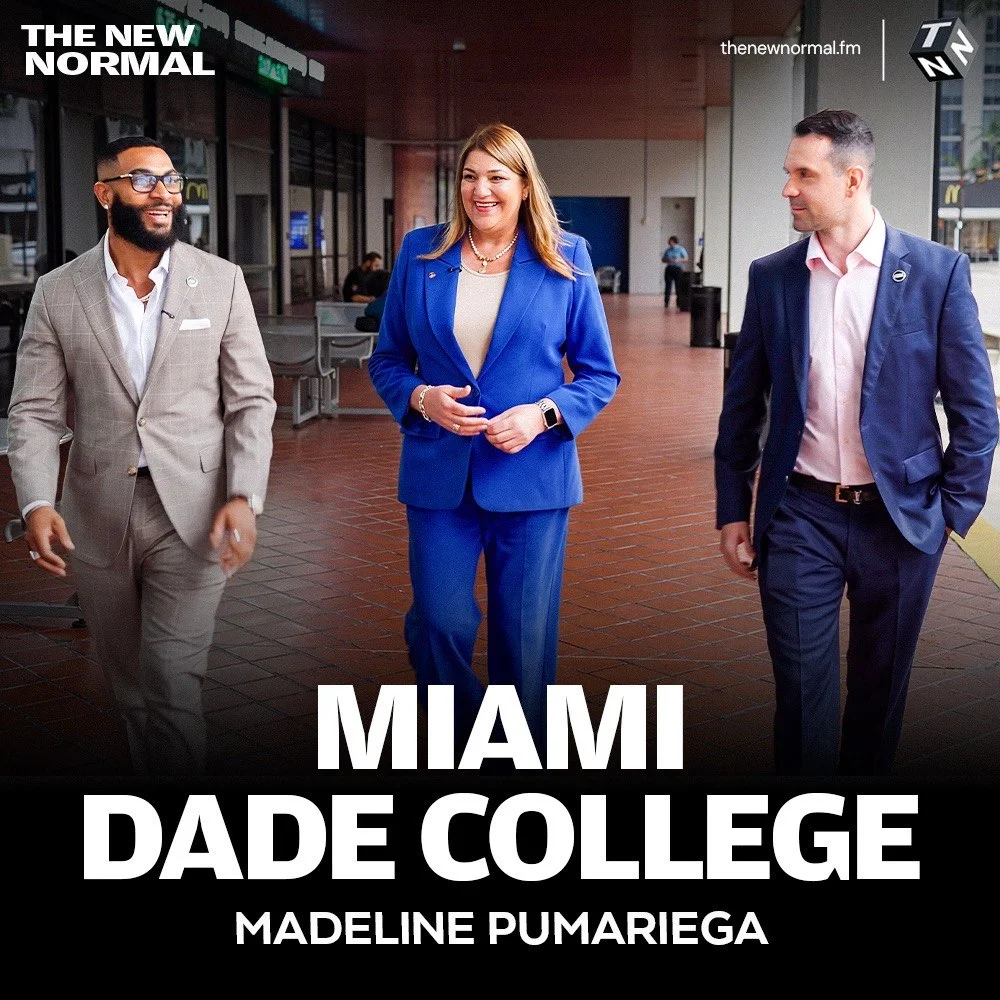










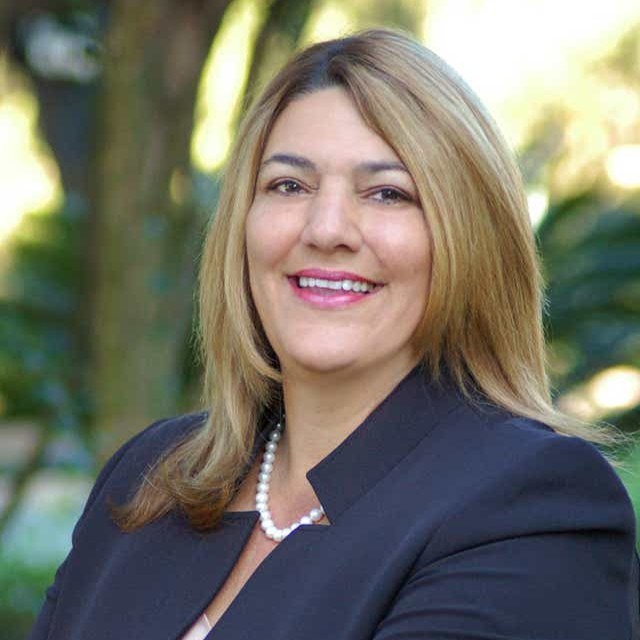
Madeline Pumariega is President of Miami Dade College, America's largest community college, serving 125,000 students across eight campuses. A former MDC student athlete, she has made AI a cornerstone of the institution's mission, deploying Digital Workers to help students plan academic paths, re-enroll, and get round-the-clock support. Under her leadership MDC has trained 10,000 people and 400 companies in AI.
Miami Dade College is America's largest community college, with 125,000 students across eight campuses. President Madeline Pumariega has made AI a cornerstone of the institution's mission, turning MDC into one of the country's most ambitious examples of AI deployment in higher education.
Hosts Ruben Harris and Timur Meyster sit down with Pumariega at MDC's AI Center to talk about how the college uses Digital Workers to help students plan academic paths, re-enroll when life gets in the way, and get support around the clock.

















.png)